

Leogant Founder Thomas Hartwig in an interview about water filtration and water quality
The composition of the water used can influence the taste and course of fermentation. Whether additional filtration is useful depends on the quality and composition of the initial water as well as the filter system used. In our interview with Leogant Founder Thomas Hartwig, we discuss water quality, water filtration, and possible differences in home fermentation.
The journey to the founding of Leogant by the Berlin water guru
How did you come up with the idea to found Leogant? Please introduce yourself briefly!
I founded Leogant about 12 years ago. The founding was much more than a simple business case. It was more of a life's work, always with a clear focus on a conscious business with meaning. From the very beginning, there was a clear purpose: to give people a good feeling with good water. The business model was rather secondary. I myself am a trained restaurateur and later studied the Asian martial art Kung Fu in China. I always had an affinity for high-quality food and a good sense of my body. Back in Berlin, I continued to focus heavily on nutrition and sports and ate a vegan diet. With 6 hours of sports a day, I quickly noticed how much more efficient my body was with high-quality spring water from the organic market. Water quality thus became a central issue for me – both in terms of taste and in the selection and preparation of my drinking water.
It's actually obvious, because our bodies and our earth largely consist of water. Water is also very interesting on a scientific level. No substance has so many properties, anomalies, that science cannot explain. With the founding of Leogant and our water filter systems, I have developed a sustainable and holistic solution to meet the individual needs of people and want to bring the importance of water to our organisms more into focus. All of this with a sustainable business without compromises.

How does the LEOGANT filter work?
I personally packed the first boxes with water filters back then in my 20 sqm office. For this, I collected boxes from everywhere to work as sustainably as possible. This sustainability, which was not as fashionable then as it is now, is still reflected in our filter systems today. All components of the water filters are already existing products. From the beginning, I scrutinize what the market already offers, take existing systems apart, see how I can improve them, and reassemble them as newly combined water filters.
The 2-phase filter system
Leogant describes its system as a two-stage water treatment. In the first stage, activated carbon filters are used, among other things. Which substances are actually reduced and to what extent depends on the specific filter system and its tested filter performance. The second stage is called "revitalization" by the provider. Which objectively measurable changes are associated with this should be assessed based on the respective technical evidence of the system.
What happens to the lime in the water?
The lime content is often viewed very critically. However, lime occurs naturally in water and contributes significantly to its taste. That's why we don't fundamentally remove lime. Which minerals and water properties are changed by a filter system depends on the respective process and the tested filter performance. Calcium and magnesium are essential minerals for humans. Ultimately, the hardness of the water is a matter of taste and can, of course, be filtered if desired.
Have you already dealt with Kombucha?
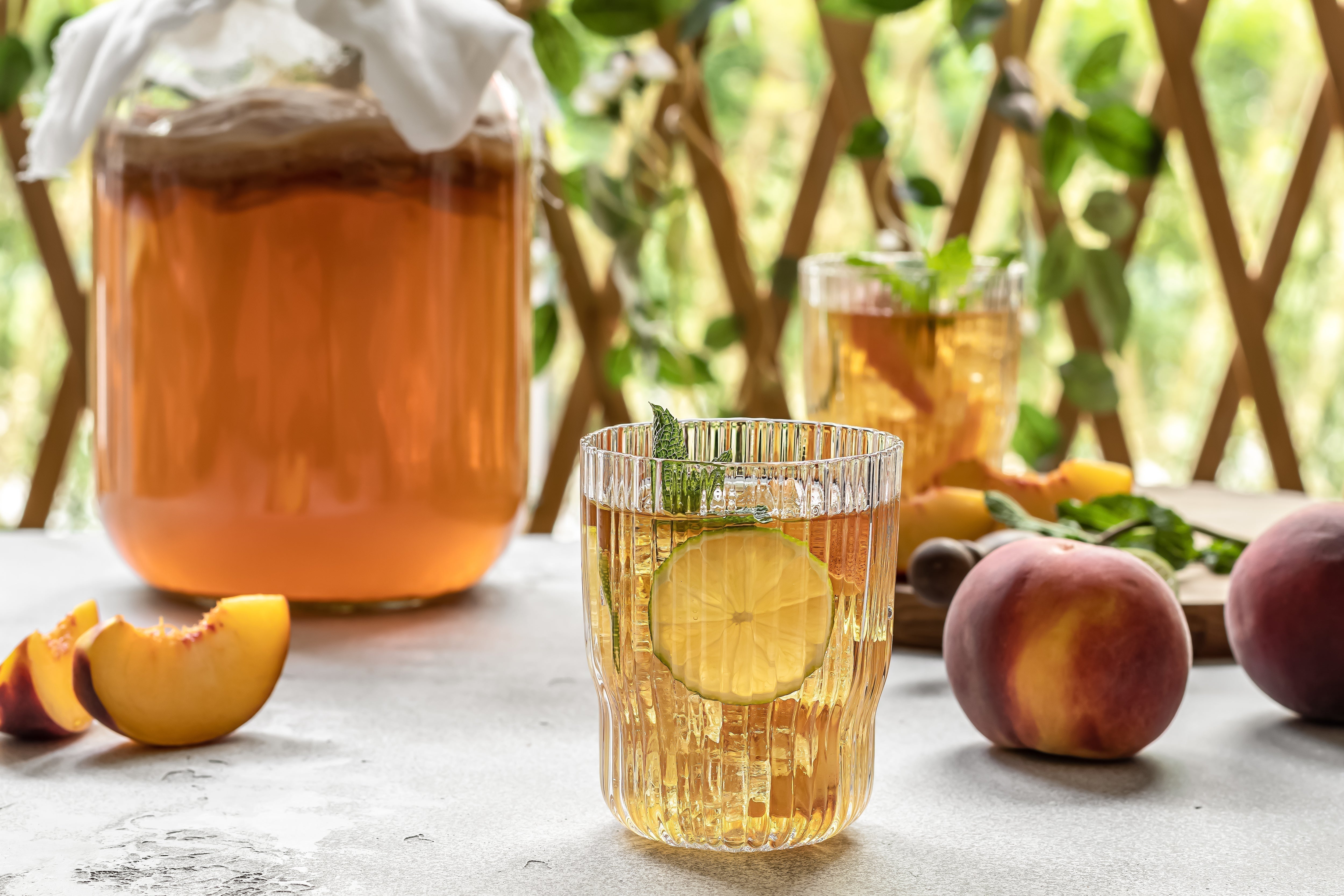
I've been a huge Kombucha fan for years and was even a speaker at the first Kombucha Summit. The Kombucha community is super curious and has remarkable solidarity. I sometimes miss that among water experts. For a good Kombucha, high-quality water is essential. You can taste the difference directly. I work with several Berlin Kombucha manufacturers and we install our Leogant water filters in their Kombucha breweries. It's super exciting to accompany the manufacturers on their journey and influence their different Kombucha flavors.

What differences can filtered water make in Kombucha fermentation?
Differences between filtered and unfiltered tap water
In my opinion, a clear distinction should be made between water for machines and drinking water for humans. Waterworks do a great job, allowing us to have clear water available at all times in everyday life. Nevertheless, their filter system understandably does not achieve spring water quality, as found in nature. If we consider water as a food, don't we all want to consume the highest possible quality?
- Here I have two options: Either I buy high-quality spring water in a glass bottle at the organic store, or I get a water filter and treat my tap water myself.
- The result: Depending on the filter system, the composition of the water can change. Which substances are actually reduced and to what extent depends on the specific filter and its tested performance. The effects of filtered water on taste and fermentation progress depend on the initial water, the filtration method, and the respective fermentation conditions.
Effects of vitalized water on Kombucha
Water composition and filtration can influence the fermentation process. However, how a specific water affects SCOBY growth, acid development, alcohol content, or microbiological stability depends on numerous factors such as the initial water, culture, temperature, and fermentation conditions. A blanket statement that "vitalized" water improves kombucha or protects against mold cannot be derived from this.
Filtered water gives Kombucha a special taste
Depending on the type of filtration and the conditions of the region from which the water originates, water quality also influences the pH value and thus the taste of the kombucha. The water should not be too hard, but also not too soft. This is, of course, a matter of taste. The fewer minerals contained in the filtered water, the more acidic the water is. This affects the pH value during kombucha fermentation. For tea and coffee, slightly softer water is beneficial for the taste. The tea fungus prefers it a little more acidic. Decalcifying water can therefore have enormous disadvantages, which then also affect the taste of the kombucha.

What initial tips can you give our readers at home to improve their water quality for fermentation?
-
If drinking water has been in the pipes for a long time, it can be useful to let it run until it reaches the desired drinking temperature before use. For specific recommendations on local water quality and house installations, the information from the respective water supplier or the responsible specialist agencies is decisive.
-
Boiling and a coffee filter do not replace a water filter with a defined filter performance. A coffee filter can retain visible particles, but it does not reliably remove dissolved substances or water hardness. For Kombucha fermentation, suitable drinking water is fundamentally crucial.
-
Semi-precious stones like rock crystal, amethyst, and rose quartz are sometimes traditionally used in water carafes and primarily serve as a decorative element there. Simply place a few of them with your water in a water jug. It is best to always use tumbled semi-precious stones, as bacteria can settle in the crevices of untumbled ones and they are not as easy to clean.
-
Tap water and bottled water are subject to different legal requirements and control systems. A general statement that one of the two options is fundamentally better controlled cannot be derived from this. For fermentation, the specific water composition and the respective production conditions are particularly relevant.
A strong water community as a future vision
What is your personal mission for the future?
In my post-Leogant vision, after 12 years in the "water business," I simply want to represent the entire exciting water topic at a meta-level. I want to build a strong water community, because, as we know, working together is always better than working against each other. I'd also like to develop great concepts around water with competitors and raise people's awareness of the topic.



Share: